

Head pain, whether caused by tension, stress, or migraines, can disrupt daily life and reduce productivity. While many people rely on medication for quick relief, natural healing methods like acupressure have gained popularity for their effectiveness and safety. Acupressure, an ancient Chinese therapy, involves applying gentle pressure to specific points on the body to stimulate energy flow and restore balance. When used correctly, acupressure points for head pain can relieve discomfort, improve circulation, and promote relaxation without side effects.
1. Understanding Acupressure and Its Connection to Head Pain Relief
Acupressure is based on the same principles as acupuncture but uses finger pressure instead of needles. According to traditional Chinese medicine, the body’s energy, known as “Qi,” flows through pathways called meridians. When these pathways become blocked or imbalanced, acupressure points for head pain. By stimulating specific acupressure points, energy flow is restored, helping to relieve pain and tension. For head pain, acupressure targets points that influence the nervous system, blood circulation, and muscle relaxation. Regular practice can reduce the frequency and intensity of headaches, making it a valuable tool for natural pain management.
2. The Most Effective Acupressure Points for Head Pain
Several acupressure points are known to relieve head pain effectively. Each point targets a different cause of discomfort, such as tension, sinus pressure, or migraines. Understanding where these points are located and how to apply pressure can make a significant difference in achieving relief.
LI4 (Hegu) – The Union Valley Point
Located between the thumb and index finger, LI4 is one of the most powerful acupressure points for head pain. Applying firm pressure to this point helps relieve tension headaches, sinus pain, and even neck stiffness. It works by stimulating the large intestine meridian, which influences the flow of energy throughout the upper body. To activate LI4, press the fleshy area between the thumb and index finger using the opposite hand’s thumb and forefinger for about one to two minutes while taking deep breaths.
GB20 (Feng Chi) – The Wind Pool Point
GB20 is located at the base of the skull, in the hollow areas on both sides of the neck. This point is particularly effective acupressure points for head pain caused by stress, fatigue, or poor posture. Applying gentle pressure to GB20 helps relax tight neck muscles, improve blood flow to the brain, and relieve dizziness or eye strain. To stimulate this point, place the thumbs on the hollows at the base of the skull and press upward and inward for one to two minutes while keeping the head relaxed.
Yintang – The Third Eye Point
Yintang, also known as the “acupressure points for head pain,” is located between the eyebrows, just above the bridge of the nose. This point is ideal for relieving headaches caused by stress, anxiety, or sinus congestion. Applying gentle pressure to Yintang helps calm the mind, reduce tension, and promote relaxation. To activate this point, use the index finger to press gently for one minute while breathing slowly and deeply.
Taiyang – The Great Sun Point
Taiyang is located in the temple area, about one acupressure points for head pain away from the outer corner of the eye. This point is highly effective for relieving migraines, eye strain, and tension headaches. Applying circular pressure to Taiyang helps improve blood circulation around the head and relax facial muscles. To use this point, apply gentle circular motions with the fingertips for one to two minutes on both sides of the head.
GV20 (Baihui) – The Hundred Meetings Point
GV20 is located at the top of the head, in the center where the lines from the ears and the nose intersect. This point is known for its ability to relieve headaches, dizziness, and mental fatigue. Stimulating GV20 helps balance energy flow in the body and promotes a sense of calm. To activate this point, place the fingertips on the top of the head and apply gentle downward pressure for one minute while maintaining steady breathing.
3. How to Apply Acupressure for Head Pain Relief
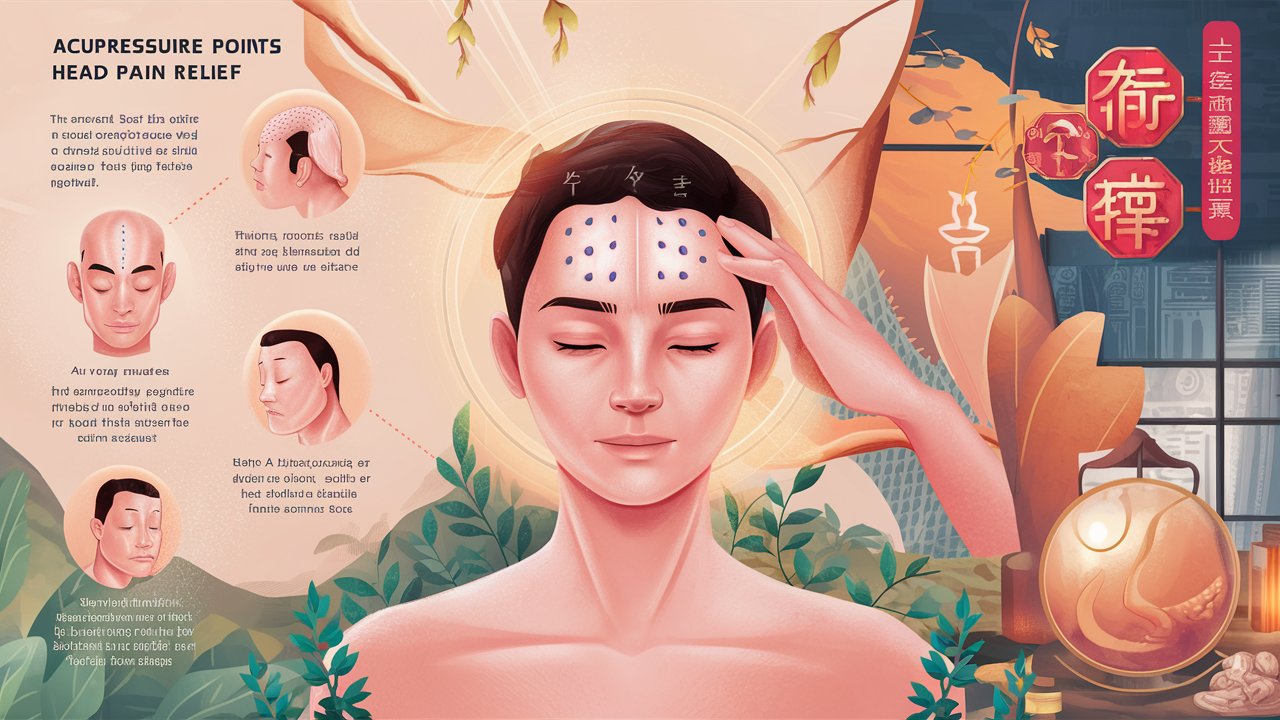
Applying acupressure for head pain is simple and can be done anywhere without special tools. Begin by sitting comfortably in a quiet space and taking a few deep breaths to relax. Use the fingertips or thumbs to apply firm but gentle pressure to the chosen acupressure point. Maintain pressure for one to two minutes, then release slowly. Repeat the process on both sides of the body if applicable. It is important to avoid pressing too hard, as excessive pressure can cause discomfort. Consistency is key—regular practice can help prevent recurring headaches and promote overall well-being.
4. Benefits of Using Acupressure for Head Pain
Acupressure offers numerous benefits beyond immediate pain relief. It helps improve blood circulation, reduce muscle tension, and release endorphins—the body’s natural painkillers. Unlike medication, acupressure has no side effects and can be practiced as often as needed. It also promotes relaxation, reduces stress, and enhances mental clarity. Over time, regular acupressure sessions can help reduce the frequency of headaches and improve sleep quality. This holistic approach not only addresses physical pain but also supports emotional balance and overall health.
5. Precautions and When to Seek Medical Advice
While acupressure is generally safe, it is important to practice it correctly. Avoid applying pressure to open wounds, bruises, or inflamed areas. Pregnant individuals should consult a healthcare professional before using certain acupressure points, as some may stimulate uterine contractions. If headaches are severe, persistent, or accompanied by symptoms such as vision changes, nausea, or confusion, medical attention should be sought immediately. Acupressure is a complementary therapy and should not replace professional medical treatment when necessary.
6. Combining Acupressure with Other Natural Remedies
For enhanced results, acupressure can be combined with other natural remedies such as aromatherapy, hydration, and relaxation techniques. Essential oils like peppermint, lavender, and eucalyptus can be applied to the temples or inhaled during acupressure sessions to boost relaxation and relieve tension. Staying hydrated and maintaining good posture also help prevent headaches. Incorporating mindfulness practices such as meditation or deep breathing can further enhance the calming effects of acupressure, creating a holistic approach to head pain management.
Conclusion
Acupressure points for head pain offer a natural, effective, and accessible way to relieve discomfort and promote overall well-being. By stimulating specific points such as LI4, GB20, acupressure points for head pain, and GV20, individuals can experience relief from tension, stress, and fatigue without relying on medication. Regular practice not only alleviates pain but also enhances relaxation, mental clarity, and energy balance. As an ancient healing technique with modern relevance, acupressure continues to empower people to take control of their health naturally and safely.
Frequently Asked Questions (FAQ)
1. What are acupressure points for head pain?
Acupressure points for head pain are specific areas on the body that, when pressed, help relieve headaches, tension, and stress by improving energy flow and circulation.
2. How long should pressure be applied to each point?
Pressure should be applied for about one to two minutes per point, using firm but gentle pressure while maintaining steady breathing.
3. Can acupressure help with migraines?
Yes, acupressure can help reduce the intensity and frequency of migraines by relaxing muscles, improving blood flow, and calming the nervous system.
4. How often can acupressure be practiced?
Acupressure can be practiced daily or as needed whenever head pain occurs. Regular sessions can help prevent recurring headaches.
5. Are there any side effects of acupressure?
When performed correctly, acupressure has no side effects. However, excessive pressure or incorrect technique may cause temporary soreness.
6. Can acupressure replace medication for headaches?
Acupressure can complement medical treatment but should not replace prescribed medication for chronic or severe headaches without consulting a healthcare professional.
7. Which acupressure point is best for tension headaches?
The LI4 (Hegu) point between the thumb and index finger is one of the most effective points for relieving tension headaches and neck stiffness.
8. Is acupressure safe for everyone?
Acupressure is generally safe for most people, but individuals with medical conditions, pregnant women, or those with injuries should consult a healthcare provider before practicing.
